
Recent Blog
The Truth About Zero-Fee Transfers: Why The Final Payout Matters Most
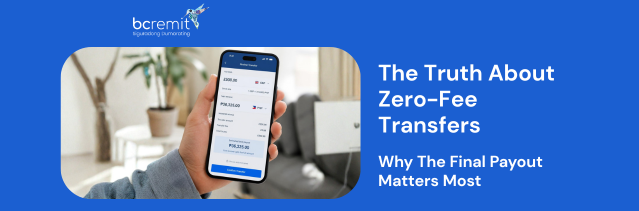
When you send money home to the Philippines, it is easy to focus on one number first: the transfer fee.
A “zero fee money transfer” can sound like the obvious best deal. After all, if you are not paying a fee, you must be saving money, right?
Not always.
The more important number is often the recipient amount, which is the actual number of pesos your family receives after the exchange rate, fees, and other costs are taken into account.
Two remittance providers can charge very different fees and still deliver nearly the same amount. In some cases, a provider advertising no transfer fee may actually give your recipient fewer pesos because the exchange rate is less favorable.
That is why comparing the final payout matters more than simply looking for a “zero fee” label.
What Is the Recipient Amount?
The recipient amount is the final amount your beneficiary receives in Philippine pesos after your transfer is converted from your sending currency.
For example, if you send £500 from the UK, the recipient amount might be:
- Provider A: ₱36,100
- Provider B: ₱35,700
- Provider C: ₱36,250
Even if Provider B charges no transfer fee, it may still provide less value if its exchange rate is weaker.
For OFWs and overseas Filipinos who send money regularly, those differences can add up over time. If you remit every month, even a few hundred pesos less per transfer could mean thousands of pesos lost over a year.
Why “Zero Fee” Does Not Always Mean Free
A zero fee money transfer usually means the provider is not charging you an obvious, separate transfer fee.
But that doesn’t necessarily mean the transfer costs nothing. Remittance providers can earn money in several ways, including through the exchange rate they offer.
The difference between the market exchange rate and the rate offered to you is sometimes referred to as an exchange rate margin or spread. That margin is one of the most common remittance hidden fees consumers overlook.
For example, one provider may advertise a £0 transfer fee but offer a lower GBP-to-PHP rate. Another provider may charge a small fee but offer a stronger exchange rate.
The second option could still result in your family receiving more pesos overall. This is why you should always compare the full transaction, not just the fee.
How Remittance Hidden Fees Can Affect Your Transfer
Remittance hidden fees are not always literally “hidden.” They may simply be less obvious than the upfront transfer charge.
Common costs to watch for include:
- Exchange rate margins
- Transfer fees
- Card processing charges
- Bank receiving fees
- Cash pickup fees
- Express transfer charges
Not every provider charges all of these, but the important thing is to look at the total cost and final recipient amount before confirming a transfer.
A provider can technically advertise a zero fee money transfer while earning money through a less competitive exchange rate. That is why comparing the final amount in pesos is so important.
A Simple Example: £500 Sent to the Philippines
Imagine you want to send £500 to your family.
Provider A offers:
- Transfer fee: £0
- Exchange rate: ₱71.00 per £1
- Recipient amount: ₱35,500
Provider B offers:
- Transfer fee: £2.99
- Exchange rate: ₱72.20 per £1
- Amount converted after fee: £497.01
- Recipient amount: approximately ₱35,884
Even though Provider A advertises a zero fee money transfer, Provider B delivers roughly ₱384 more. That is the number your family actually feels.
For a one-off transfer, the difference may seem small. But if you send money every month, the annual difference could be more than ₱4,600.
That could cover groceries, bills, school expenses, or part of an emergency fund.
Why the Recipient Amount Philippines Customers See Matters Most
When comparing remittance services, the most useful question is not:
“How much is the fee?”
It is:
“How many pesos will my recipient actually receive?”
The recipient amount Philippines-based family members receive reflects several parts of the transfer at once:
- The amount you are sending
- The exchange rate
- The transfer fee
- Any additional charges
- The payout method
This makes it a much better comparison tool than the advertised fee alone. So before sending money, compare the final payout across providers using the exact same sending amount.
If you are sending £300, compare £300 across each service. If you are sending €500, compare €500.
That gives you a much clearer picture of which transfer actually delivers better value.
Exchange Rates Can Matter More Than Fees
For larger transfers, the exchange rate can have a bigger impact than the transfer fee.
Consider a £1,000 remittance.
A difference of just ₱0.50 in the GBP-to-PHP exchange rate changes the recipient amount by ₱500.
A difference of ₱1.00 changes it by ₱1,000.
That means even if one provider charges a £2 or £3 fee, it could still outperform a zero fee money transfer if its exchange rate is stronger.
This becomes especially important for OFWs sending larger amounts for:
- Tuition fees
- Medical expenses
- Home improvements
- Property payments
- Family emergencies
- Business expenses
The larger the transfer, the more attention you should pay to the exchange rate.
Do Not Compare the Exchange Rate Alone Either
While the exchange rate is important, it should not be the only factor you compare. The best transfer is usually the one that combines a competitive rate with reasonable fees and a reliable payout process.
A very strong exchange rate may not help much if the provider adds a large fee at checkout. Similarly, a low-fee transfer may not be worthwhile if the exchange rate is poor.
The easiest approach is to compare these four things together:
- How much you are sending
- The exchange rate
- The total fees
- The final recipient amount
If those are clear, you can make a much more informed decision.
Watch Out for Promotional Rates
Some remittance providers offer promotional exchange rates or zero-fee transfers for first-time customers. These can be useful, but make sure you know what happens after the promotion ends.
The rate or fee on your first transfer may not reflect what you will pay on your second, third, or tenth transfer. For OFWs who send money regularly, long-term value is more important than a one-time promotion.
Check whether:
- The zero fee applies only to your first transfer
- There is a transfer limit
- The exchange rate changes after the promotion
- Fees vary by payment method
- The offer only applies to certain payout options
This can help you avoid choosing a provider based on an introductory offer that does not last.
Compare Transfers Before You Confirm
It only takes a few minutes to compare remittance options before sending. Before confirming a transfer, check the quoted recipient amount from two or three providers.
Use the same sending amount and payout method so the comparison is fair. For example, if you are sending money to a Philippine bank account, compare bank deposit quotes across each provider. If you are sending to a mobile wallet, compare mobile wallet transfers.
Small differences in the recipient amount may seem insignificant, but regular remitters can save meaningful amounts over time by paying attention.
Send More Money Home Confidently with BCRemit
The next time you see a “zero fee money transfer” promotion, look beyond the headline. A £0 transfer fee can be attractive, but it does not tell you the whole story.
Instead, check the exchange rate, look for possible remittance hidden fees, and compare the final recipient amount Philippines-based loved ones will actually receive. That final payout is what matters most. When you are working hard abroad and sending part of your income home, every peso counts!
BCRemit helps overseas Filipinos send money to the Philippines with competitive exchange rates, clear fees, and an easy transfer process. We offer fee promos and discounts for birthdays, first-time transfers, and other special events, but even on a regular day, our fees are low so you save well after the first time you remit.
Whether you are supporting everyday household expenses, paying for school, covering medical costs, or simply sending your regular padala, knowing exactly where your money is going makes each transfer easier to manage. Download the BCRemit app from the Apple App Store or Google Play, create your account, compare your transfer details, and send money home with greater confidence. Pag sa amin, siguradong dumarating!
Subscribe to our Newsletter
Our Global Presence
🌐 Online Services Available Open 24/7
-
Sunday: Open 24 hours
-
Monday: Open 24 hours
-
Tuesday: Open 24 hours
-
Wednesday: Open 24 hours
-
Thursday: Open 24 hours
-
Friday: Open 24 hours
-
Saturday: Open 24 hours